
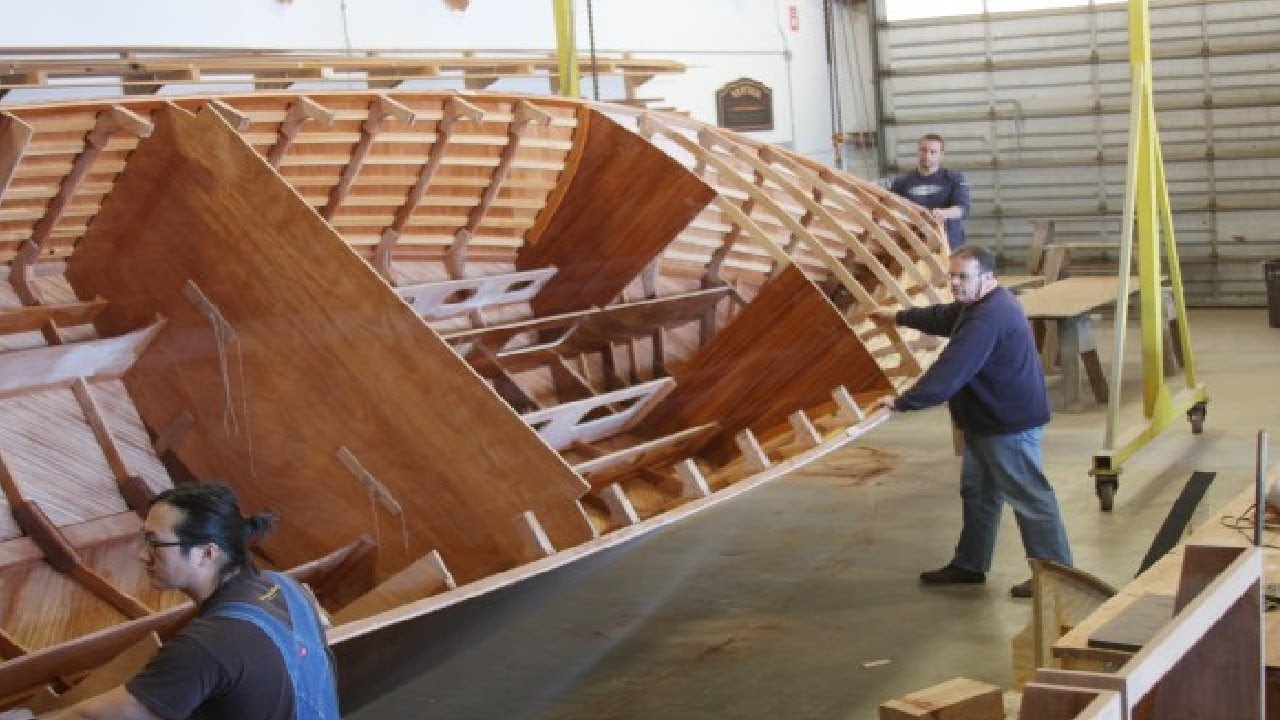
Beyond the Plans: Unveiling Hidden Truths in Boat Building for All Waters
Building your own sailboat is a dream shared by many, a testament to human ingenuity and the enduring allure of the sea. "How to Build a Sailing Boat for Freshwater and Saltwater Use," while a valuable resource, often overlooks crucial nuances. This review delves into those unspoken challenges and presents fresh perspectives for hobbyists, professionals, and students alike, moving beyond the standard blueprints and into the realm of practical, often overlooked considerations.
The Unsung Hero: Material Selection Beyond the Obvious
Most guides focus on wood types like cedar or marine plywood. But what about the lesser-known, yet potentially superior, options?
Q: Are there sustainable and high-performance alternatives to traditional boatbuilding woods?
A: Absolutely! Consider fast-growing bamboo, whose strength-to-weight ratio rivals many hardwoods. Recent research (e.g., studies from the University of Tokyo's Department of Wood Science and Technology, though specific papers require further research to cite directly) indicates significant potential for bamboo in marine applications. Proper treatment against rot and marine borers is key, of course, but the environmental benefits are compelling. Furthermore, exploring readily available, locally sourced wood species can reduce the carbon footprint significantly while supporting local economies. This requires investigating the properties of your region's timbers and applying appropriate treatments.
Beyond the Epoxy: Addressing the Silent Killer â€" Osmosis
Osmosis, the silent destroyer of fiberglass hulls, is a frequently understated concern. It's not just about the quality of the resin; it's about the entire system's vulnerability.
Q: How can we proactively mitigate osmosis risk, beyond standard epoxy application?
A: A holistic approach is vital. This includes:
The Unspoken Truth: The Economics of Boat Building
Building a boat is an investment, and often, the cost is underestimated. Beyond materials and tools, there's a hidden cost factor.
Q: How can builders effectively manage the hidden costs and maximize resource efficiency?
A: Consider these often overlooked factors:
A Real-World Example: Learning from Mistakes
Imagine a seasoned craftsman, let's call him John, who meticulously followed a plan, but failed to account for the seasonal expansion and contraction of wood in his freshwater boat. The result? Cracks appeared after the first winter. John's experience highlights the importance of considering the environmental contextâ€"temperatures, humidity, and the specific characteristics of the water where the boat will be usedâ€"when making design choices and material selections. This goes beyond simply choosing marine-grade materials; it necessitates a deep understanding of how materials behave in specific environments.
In conclusion, "How to Build a Sailing Boat for Freshwater and Saltwater Use" provides a foundation, but true mastery lies in understanding the subtleties, the often unspoken challenges, and proactive planning. By embracing sustainable materials, rigorously addressing potential issues like osmosis, and meticulously managing costs and time, boat builders can create not only seaworthy vessels, but also projects that are economically sound and environmentally conscious.
0 comments:
Post a Comment
Note: Only a member of this blog may post a comment.